

How to Find Your Skin Undertone: 7 Simple Tests
Table of Contents
- Why Your Skin Undertone Matters More Than Your Shade
- Set Up Your Skin Undertone Test in Natural Light
- The Vein Test: Reading Green, Blue, and Purple Veins
- How to Check Skin Undertone With White Paper
- Gold vs. Silver Jewelry and the Colors You Look Best In
- Neutral vs. Peach Undertone: Telling Them Apart
- When Your Tests Conflict: A Repeatable Method
- How to Find the Right Foundation Shade for Your Undertone
- Frequently Asked Questions
Last Updated: October 18, 2026
Why Your Skin Undertone Matters More Than Your Shade
Learning how to find your skin undertone is the difference between makeup that disappears into your skin and makeup that sits on top of it like a mask. The culprit is almost always undertone.
Undertone is the subtle hue beneath your skin's surface. It does not change with sun exposure, breakouts, or a new skincare routine. Depth changes. Undertone stays.
Skin Tone vs. Undertone: What's the Difference?
Skin tone is the surface color of your skin, measured from light to deep. Skin undertone is the underlying hue beneath that surface color, falling into warm, cool, or neutral families. Two people can share the same skin tone and have completely different undertones.
Think of it this way:
- Skin tone = how light or deep you are
- Undertone = the warmth or coolness running underneath
- Surface color = temporary redness, tan, or flushing that sits on top
The Three Main Undertone Categories
Most people fall into one of three groups. A smaller number sit outside them, which we cover below.
- Warm: golden, yellow, or peachy hues
- Cool: pink, red, or bluish hues
- Neutral: a balanced mix with no strong lean either way
Set Up Your Skin Undertone Test in Natural Light
Your skin undertone test only works if you remove the variables that distort color: daylight and bare skin, every time.
Here is the setup we recommend before any test:
- Wash your face and let it dry fully.
- Remove makeup, tinted moisturizer, and SPF.
- Find a window with indirect daylight. Never direct sun.
- Wait 15 minutes for your skin to settle after washing.
- Wear a white or neutral top so clothing color does not reflect onto your skin.
Why Daylight and Bare Skin Change the Result
Bathroom bulbs and phone screens lie. Warm bulbs push everything yellow, cool office lighting pushes everything pink, and blue light adds a cast that has nothing to do with your skin.
Indirect daylight shows true color. This is the same principle professional shade matching relies on, and the Smithsonian Institution guidance on color perception explains how surrounding light shifts how we read hue.
Bare skin matters just as much: foundation, bronzer, and even tinted SPF hide the undertone you are trying to see.
The Vein Test: Reading Green, Blue, and Purple Veins
The vein test is the fastest starting point: look at the veins on the inside of your wrist in daylight and note the color.
- Green veins usually point to a warm undertone.
- Blue or purple veins usually point to a cool undertone.
- A mix of green and blue usually points to neutral.
A few caveats matter. Thin skin, visible redness, and vein depth can throw off the reading. If your wrist veins are faint, check your inner forearm instead.
The vein test is a clue, not a verdict. Treat it as one data point.
Why the Vein Test Fails for Some People
A few common patterns explain most bad vein readings:
- Very fair skin: veins sit close to the surface and can look green even on a cool undertone, because the skin itself is translucent.
- Deep skin: veins are harder to see, and the ones you can see often read blue or purple regardless of undertone.
- Surface redness: rosacea, recent cleansing, or a warm room pushes the wrist pink and masks the true vein color.
If any of these apply, do not force a reading. Move to the white paper test and the jewelry test and score all three together.
How to Read Ambiguous Veins
Many people see both green and blue in the same wrist. That is not a failed test; it is a neutral signal. Look for the dominant color across the widest vein, not a single thin branch.
A greenish-gray vein reading is worth flagging separately. It often shows up on olive undertones, which sit outside the warm-cool-neutral trio. If your veins read green-gray and foundation keeps turning orange or ashy on you, treat olive as a live possibility and test muted shades rather than bright warm or cool ones.
How to Check Skin Undertone With White Paper
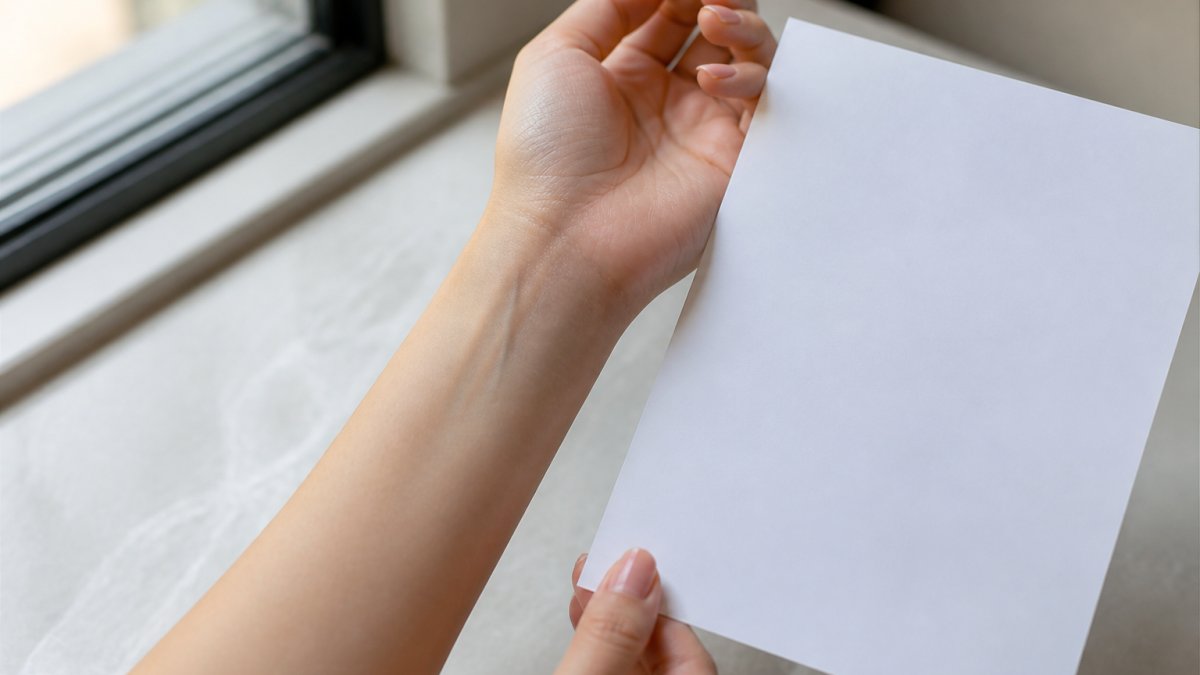
The white paper test is the cleanest comparison you can run at home. Hold a plain white sheet next to your bare face in daylight and watch what your skin does against it.
- Skin looks yellow or golden against the paper: warm undertone.
- Skin looks pink or rosy against the paper: cool undertone.
- Skin looks balanced with no strong cast: neutral undertone.
Use true white, not cream or off-white. A tinted "white" shirt or a warm-toned wall behind you will skew the result.
Gold vs. Silver Jewelry and the Colors You Look Best In
Jewelry is a reliable check because metal reflects against your skin all day. Hold a gold piece and a silver piece near your bare face in daylight and compare.
- Gold flatters more: warm undertone.
- Silver flatters more: cool undertone.
- Both work equally well: neutral undertone.
The same logic applies to clothing. Warm undertones tend to look best in cream, camel, olive, and warm reds. Cool undertones tend to look best in true white, navy, jewel tones, and cool pinks.
Neutral vs. Peach Undertone: Telling Them Apart
Neutral and peach undertones get confused constantly, sending people to the wrong foundation shade.

A neutral undertone has no strong lean toward warm or cool. A peach undertone is warm-leaning with a soft pink-orange cast, so it sits between warm and neutral.
Full Cover Foundation - Tones →
How to tell them apart:
- Neutral skin looks balanced against both gold and silver.
- Peach skin looks best in gold and picks up a soft warmth in daylight.
- Neutral skin shows no pink-orange glow in the white paper test.
If both gold and silver look good but warm shades still pull orange on you, you are likely peach-leaning rather than fully warm.
Where Olive Undertones Fit
Olive is the undertone most guides skip, and it causes the most foundation frustration. Olive skin has a green or gray-green cast outside the warm-cool-neutral trio.
Signs of an olive undertone:
- Foundation turns orange or ashy on you
- The white paper test shows a greenish tint
- You look better in muted colors than in bright warm or cool ones
Olive skin can be light or deep. A fair olive and a deep olive share the same green-gray cast; they differ only in surface depth. That is why shopping by depth alone fails so many olive undertones.
Undertone Across Skin Depths
Undertone is separate from lightness or darkness, and the same test can read differently depending on depth. On lighter skin, surface redness and visible veins dominate. On deeper skin, undertone shows up more in how colors reflect against the face than in vein color.
A practical adjustment: on deeper skin, weight the jewelry test and the clothing test higher than the vein test, because vein color is harder to see and less reliable.
When Surface Color Masks Your Undertone
Tanning, sunburn, and surface redness are the most common reasons a peach or neutral reading comes out wrong. A tan adds warmth and can make a cool undertone read peach for weeks; a sunburn adds red and can make a warm undertone read cool.
To separate surface color from undertone, run your checks on an area that tans least, such as the inner forearm or the jawline under the chin, and repeat the full set after the tan fades.
When Your Tests Conflict: A Repeatable Method
Conflicting results are normal, and this is where most people give up.
Run all four checks in daylight, then score each one:
| Test | Warm Signal | Cool Signal | Neutral Signal |
|---|---|---|---|
| Vein color | Green | Blue or purple | Mix of both |
| White paper | Yellow or golden cast | Pink or rosy cast | Balanced, no cast |
| Jewelry | Gold flatters more | Silver flatters more | Both work |
| Clothing | Cream and camel flatter | True white and navy flatter | Either works |
Count your signals. Two or more warm signals point warm. Two or more cool signals point cool.
Then verify. Repeat the whole set on a different day, in the same light. If the result holds, you have your answer.
One test is a guess. Four tests, scored twice, is a result.
How to Find the Right Foundation Shade for Your Undertone
Once you know your undertone, shade matching gets easier. Match depth and undertone together, not just depth.
Start with these steps:
- Pick two or three shades in your undertone family.
- Swatch each one on your jawline, not your hand.
- Blend down onto the upper neck.
- Check in daylight, never under store lighting.
- Wait ten minutes before judging the dry finish.
At Rose Noir Cosmetics, our Full Cover Foundation - Tones ($34.60) is grouped by undertone family, with warm, neutral, and cool shades listed separately so you can shop your family first. If you are still narrowing down depth, our Foundation - Warm Nude ($37.50) sits in the neutral light-to-medium range, and our Foundation - Porcelain ($37.50) covers warm light-to-medium depths. A Stipple & Blend Foundation Brush ($39.80) helps you buff the product in so you can see the real finish.


For a deeper look at how shade systems are built, the cosmetics labeling and color additive guidance from the FDA explains how pigments are regulated in the products you buy.
If results still conflict after two rounds, book an in-person shade match at a beauty counter and ask them to swatch your jawline in daylight. Verify the match yourself before you buy.
Frequently Asked Questions
What undertone do purple veins usually indicate?
Purple or blue-purple veins on the inside of your wrist usually point to a cool skin undertone, especially when they look distinctly violet rather than green. Green-tinted veins lean warm, and a mix of green and blue suggests neutral. The vein test is a starting clue, not a verdict: lighting, tanning, and surface redness can all shift how vein color appears, so confirm the result with a second test like the white paper comparison before you buy a foundation.
Can you have both warm and cool undertones?
Yes. Many people fall into the neutral category, where warm and cool clues appear together. You might see green and blue veins, look equally good in gold and silver jewelry, or find that both warm and cool foundation shades pull slightly off. Neutral undertones usually match shades labeled neutral, and some people lean slightly warm-neutral or cool-neutral. If your skin also has a greenish or grayish cast, you may have an olive undertone, which sits outside the basic three categories.
Does your skin tone determine your undertone?
No. Skin tone describes how light or deep your surface color is, while undertone is the subtle hue beneath it. A person with deep skin can have a cool, warm, or neutral undertone, and the same is true for very fair skin. That is why two people with similar depth can wear completely different foundation families. When you shop, pick your depth first, then use an undertone test to choose between warm, neutral, and cool shades within that depth.
How do you use your undertone to choose foundation?
Once you know your undertone, filter foundation shades by family before matching depth. Warm undertones usually match golden or yellow-based shades, cool undertones match pink or rosy-based shades, and neutral undertones match balanced shades with neither cast dominating. Test a candidate along your jawline and upper neck in daylight, not indoor light, and check that it disappears into your skin. For a full-coverage option, the Full Cover Foundation - Tones ($34.60) is grouped into warm, neutral, and cool families so you can start in the right lane.
Undertone confusion is the reason so many foundation bottles end up unused in a drawer. Rose Noir Cosmetics makes the process simpler by organizing our foundation by undertone family, so you can start with warm, neutral, or cool and narrow from there. Browse our full foundation range, use the shade families to filter your options, and get a match that actually looks like your skin. Get started with Rose Noir Cosmetics and stop guessing at the counter.